Arcade
 Adventure
 Shooter
 Girl
 Puzzle
 Sport
 Horror
 Board
 Airplane
 Animal
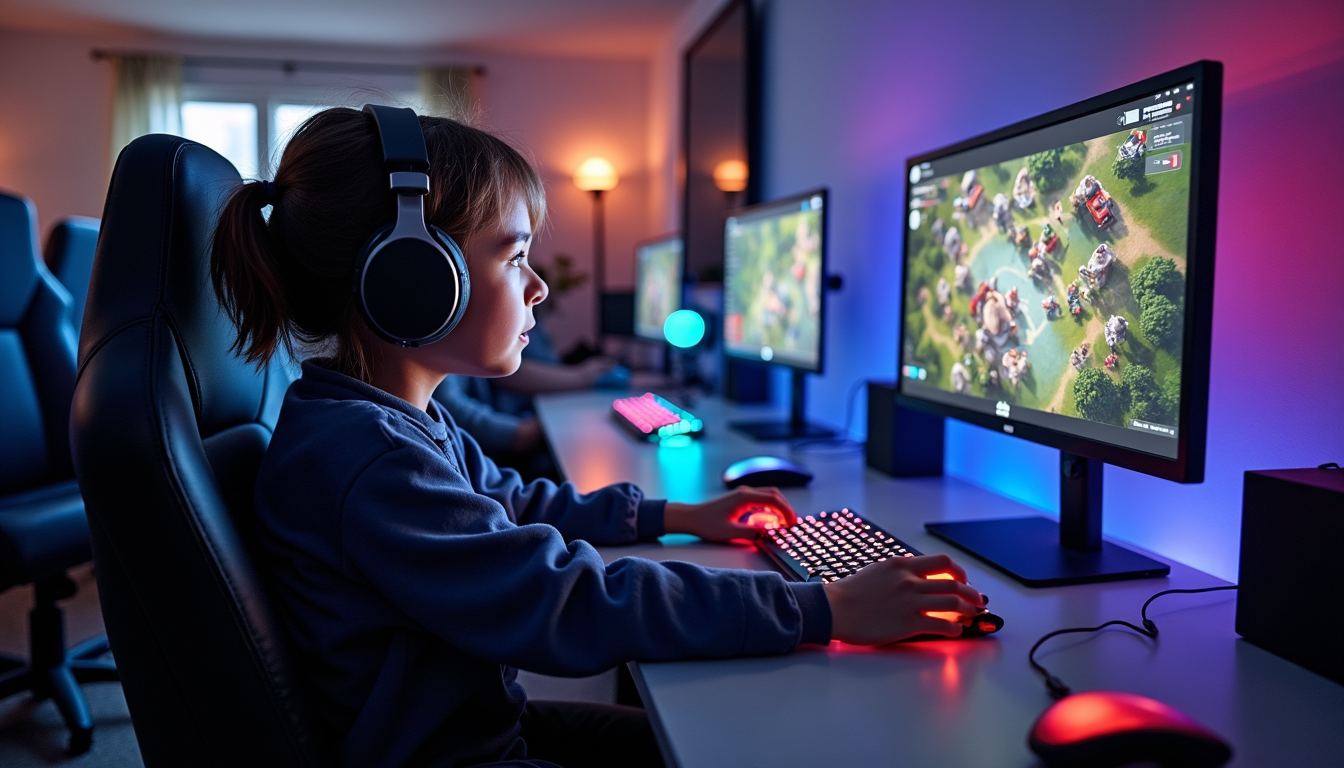
Let’s be real for a second. Most people who don’t game think it’s just mindless thumb exercise. You know the stereotype—pizza boxes, energy drinks, and blank stares at a glowing screen. But here’s the thing they’re missing: online games improve brain skills in ways that crossword puzzles and Sudoku never could.
I’ve watched my own scatterbrained focus sharpen after late-night Overwatch sessions. My girlfriend, a total non-gamer, recently tried Portal 2 co-op with me and was shocked how exhausted her brain felt afterward. That’s not burnout. That’s a workout.
So let’s put the myth to rest. Whether you’re dodging bullets in Fortnite or managing a virtual farm in Stardew Valley (yes, even that counts), your gray matter is getting a serious boost.
The Hidden Gym Inside Your Favorite Games
We tend to think of “brain training” as boring. Flashcards. Lumosity. Repetitive math problems. Ugh.
But online games? They trick you into cognitive enhancement. You’re not trying to get smarter—you’re trying to survive a raid, outbuild an opponent, or solve a puzzle before the timer runs out. The learning happens underneath, almost like a sneaky side effect.
And the research backs this up. Multiple studies have shown that action games, in particular, improve everything from reaction time to decision-making under pressure. But let’s break down exactly how online games improve brain skills across different areas.
1. Working Memory: Juggling Without Dropping the Ball
Ever tried to lead a team in League of Legends or Dota 2? You’re tracking enemy cooldowns, your own item build, the minimap, and your teammate’s low-health bar all at once. That’s not casual playing. That’s high-speed mental juggling.
Working memory is your brain’s sticky note. It holds small chunks of info temporarily while you do something else. Online games constantly refresh that sticky note, forcing you to update priorities every few seconds.
A good example: In Among Us, you have to remember who was where, who acted sus, and also fake your own tasks convincingly. That’s deception, recall, and task-switching rolled into one chaotic round.
Real-world payoff: You’ll get better at remembering grocery lists without checking your phone, or following multi-step instructions at work without zoning out halfway through.
2. Rapid Decision-Making Under Uncertainty
Here’s where online gaming really shines. Single-player games let you pause. Online games don’t. That human on the other side isn’t waiting for you to decide.
Games like Valorant, Apex Legends, or even Rocket League force split-second choices with incomplete information. Should you push now or hold back? Is that footstep an enemy or your teammate? Should you use your ultimate ability or save it?
These micro-decisions happen in milliseconds. And your brain builds faster neural pathways each time.
I’ve noticed this spill over into real life, weirdly enough. I make quicker calls while driving in heavy traffic. I’m less paralyzed by “analysis paralysis” when choosing a restaurant or replying to emails. The fear of making the wrong choice? Still there. But the hesitation? Much smaller.
3. Attention and Filtering Out Noise
We live in distraction hell. Phones buzzing. Slack notifications. TikTok brain rot. But online games train a specific type of attention called selective visual attention.
Think about Call of Duty or Battlefield. There’s chaos everywhere—explosions, gunfire, chat spam, teammate markers. And yet, you somehow spot that one enemy sniper’s glint from 200 meters away. Your brain has learned to filter the irrelevant noise and lock onto the signal.
This is huge. Because most people think focus means “staring harder.” But real focus means knowing what to ignore. Online games force that skill constantly.
I once watched my non-gamer dad try Warzone. He couldn’t see the enemy standing right in front of him because he was overwhelmed by the HUD. After two weeks of playing, he spotted campers before I did. That’s neuroplasticity in action.
4. Task Switching Without Losing Your Place
Multitasking is a myth. Your brain doesn’t do two things at once—it switches rapidly between them. And that switching costs time and mental energy.
But online games? They’re task-switching boot camps.
Consider StarCraft II or Age of Empires IV. You’re managing resources, building units, scouting the map, and attacking simultaneously. High-level players switch tasks every few seconds without losing momentum. That’s called “cognitive flexibility.”
Even casual games like Fall Guys or Animal Crossing: New Horizons (online visits) require shifting between social chat, inventory management, and timing-based jumping puzzles.
The skill transfers to real life too. You’ll notice you can bounce between spreadsheets, emails, and phone calls with less mental friction. The gears just shift smoother.
But Wait—Do All Online Games Count?
Not all games are created equal. And I’d be lying if I said every online game is brain food.
The good stuff:
-
Real-time strategy (RTS) like StarCraft
-
Tactical shooters (Valorant, CS2)
-
MOBAs (League of Legends, Dota 2)
-
Cooperative puzzle games (Portal 2 co-op, Keep Talking and Nobody Explodes)
-
Social deduction games (Among Us, Town of Salem)
The not-so-good stuff:
-
Hyper-casual clicker games with no real decisions
-
Mindless grinding MMOs where you’re just repeating the same rotation
-
Games with toxic chat that spikes your cortisol (stress is not brain training)
The common thread? Cognitive load. If the game doesn’t make you think, adapt, or remember anything, it’s probably not helping much.
That said, even “brainless” games can improve mood and stress recovery, which indirectly helps cognition. So don’t beat yourself up over a little Roblox downtime.
Social Brain Skills: The Overlooked Benefit
We talk about reaction time and memory. But online games are also social ecosystems. And social cognition is a brain skill too.
When you play Final Fantasy XIV or World of Warcraft, you’re not just fighting dragons. You’re reading teammates’ emotions, negotiating loot drops, coordinating timing, and sometimes resolving conflicts without losing your mind.
These are real social skills. They activate your prefrontal cortex and temporal-parietal junction—brain areas involved in empathy and theory of mind.
I’ve seen shy people become raid leaders. I’ve seen hotheads learn patience because yelling at your healer makes them play worse. Online gaming, at its best, is a social sandbox with immediate consequences for bad behavior.
And here’s a slightly messy truth: Some people learn social skills better in games than in real life. Because the stakes are lower. You can mess up, apologize, and try again without burning real-world bridges. That’s valuable.
Neuroplasticity and the “Use It or Lose It” Rule
Your brain is lazy. If you don’t challenge it, it optimizes for doing nothing. That’s why retirees who stop learning new things decline faster than those who pick up bridge, painting, or—yes—online gaming.
The brain builds new connections when you face novel, challenging, and rewarding tasks. Online games deliver all three.
-
Novel: Every match is different. Different teammates, enemies, strategies.
-
Challenging: You’re matched against players at or slightly above your skill level (thanks, skill-based matchmaking).
-
Rewarding: Wins, loot, rank ups, or just a “GG” from a teammate.
This trifecta keeps your brain plastic. And the benefits aren’t just short-term. A 2020 study suggested that older adults who played strategy games showed better cognitive maintenance over time compared to non-players.
So no, you’re not “wasting time.” You’re doing maintenance on your most important organ. That’s a much better excuse for one more round, right?
Practical Tips to Maximize Brain Gains (Without Burning Out)
Okay, so you’re convinced. But how do you actually get the benefits without falling into addiction or eye strain?
1. Rotate game genres.
Don’t just play shooters. Mix in an RTS, a puzzle game, and a social deduction game. Each one trains different cognitive muscles.
2. Play with strangers (sometimes).
Friends are comfortable. Strangers force you to adapt communication styles, read new personalities, and stay sharper. Ladder anxiety? That’s just your brain stretching.
3. Take deliberate breaks.
Every 45 minutes, stand up. Look away. Let your brain consolidate what you learned. Marathon sessions actually reduce benefits because fatigue kills cognition.
4. Review your losses.
Record your gameplay or just mentally replay what went wrong. Self-reflection turns mindless playing into deliberate practice. This alone doubles the brain benefits.
5. Turn off voice chat if it’s toxic.
Chronic stress shrinks your hippocampus. No brain gain is worth being screamed at by a 14-year-old. Mute freely.
A Small Reality Check
I’m not saying online games are magic brain pills. If you play eight hours a day and ignore sleep, exercise, and real-life relationships, your brain will suffer. Balance still matters.
Also, some people are naturally more susceptible to gaming addiction than others. Know yourself. If you miss work or skip meals to game, that’s not brain training. That’s a problem.
But for the average person? An hour or two of intentional online gaming can absolutely be part of a brain-healthy lifestyle. It’s more fun than Sudoku, more social than crossword puzzles, and arguably more effective than half the “brain training” apps out there.
Final Thoughts (Not a Generic Summary)
Here’s what I actually want you to take away.
The next time someone says “video games rot your brain,” you can smile and ask them: “Which specific cognitive skill are you talking about?” Because the research—and honestly, just basic observation—shows that online games improve brain skills across attention, memory, decision-making, and social cognition.
They’re not a replacement for reading, exercise, or sleep. But they’re also not the enemy. They’re a tool. And like any tool, the results depend on how you use it.
So go ahead. Launch your favorite game. Just maybe close the blinds first so the sunlight doesn’t glare on your screen. And if someone calls you lazy mid-match? Tell them you’re doing neuroplasticity reps.
FAQ: Your Burning Questions About Online Games and Brain Skills
I’ve been writing about gaming and cognition for a while now, and I hear the same questions over and over. So let’s clear a few things up.
1. Can online games really make you smarter, or is that just wishful thinking?
“Smarter” is a tricky word. Online games won’t teach you calculus or French vocabulary. But they will improve specific cognitive abilities—processing speed, working memory, task switching, and visual attention. Those skills often feel like being smarter because you react faster, remember more, and make better decisions under pressure. So no, it’s not wishful thinking. It’s just specific, not magical.
2. How many hours per day is actually helpful?
This is where people want a clean number, but there isn’t one. Most research suggests diminishing returns after 1–2 hours of focused play. Beyond that, fatigue kicks in, and your brain stops learning efficiently. If you’re playing 4+ hours daily, you’re probably getting more eye strain than cognitive gain. Take breaks. Mix it up. And for the love of good sleep, don’t game right before bed—blue light and adrenaline are terrible bedtime stories.
3. Are shooter games better than puzzle games for brain training?
Depends on the skill. Shooters like Valorant or Apex Legends are incredible for reaction time, selective attention, and split-second decision making. Puzzle games like Portal 2 or The Witness (online co-op versions) excel at logical reasoning and spatial planning. The real answer? Play both. Relying on just one genre is like only doing bicep curls and ignoring your legs.
4. My kid plays online games all the time. Should I be worried?
Depends on “all the time” and how they play. If grades, sleep, or friendships are suffering? Yes, worry a little. But if they’re still doing homework, seeing friends, and sleeping reasonably? The games might actually be helping their executive function. The bigger red flag isn’t gaming itself—it’s what gaming replaces. No exercise, no outdoor time, no face-to-face conversation? That’s a problem. The games aren’t the cause; they’re just the escape.
5. Do older adults benefit from online games, or is it too late?
It’s never too late. Neuroplasticity doesn’t shut off at 60. Several studies show that older adults who play strategy-based online games (think Age of Empires or even casual Words With Friends multiplayer) maintain faster processing speeds and better working memory than non-players. Start slow. Avoid toxic shooters. Co-op games with family members are perfect—you get brain training and bonding.
6. What’s the single best online game for overall brain improvement?
Honest answer? There isn’t one. But if you put a gun to my head, I’d say StarCraft II. It demands real-time strategy, working memory, rapid decision-making, task switching, and even social coordination if you play teams. It’s brutally hard, though. For beginners? Try Portal 2 co-op or Overwatch 2 on casual modes. Lower stress, still excellent training.
7. Can online games help with ADHD?
Interesting question. Some research suggests action games can improve sustained attention in people with ADHD. But—big but—they can also be hyper-stimulating, which makes boring real-life tasks feel even more unbearable afterward. So it’s a double-edged sword. If you have ADHD, try shorter sessions and pair gaming with a “low-stimulation” cool-down activity like reading or stretching. Don’t let games become your only dopamine source.
8. Do I need expensive gear to get the brain benefits?
Absolutely not. A $5,000 gaming PC won’t make you sharper than a $200 used console or even a decent laptop. The brain benefits come from cognitive load, not graphics cards. That said, a comfortable chair and a screen that doesn’t give you a headache? Worth it. But don’t let gear snobs convince you that you need RGB lights and a 240Hz monitor to train your brain. You don’t.
9. What about mobile online games? Do they count?
Some do, some don’t. Clash Royale? Yes—real-time decisions, memory, and resource management. Candy Crush with no time pressure and no opponent? Barely any cognitive benefit. The key is whether the game forces you to adapt, react, and remember under time constraints. Many mobile “online games” are just Skinner boxes with flashy colors. Be picky.
10. Is it okay to play easy games just for fun, even if they don’t train my brain?
Of course. Not everything has to be self-improvement. Sometimes you just want to chop trees in RuneScape or fish in Stardew Valley after a long day. That’s stress recovery, not brain training—and stress recovery is just as important for cognition. So don’t feel guilty. Play hard games when you want a workout. Play easy games when you want a hug. Both are valid.